Tackling the Pain of Clinic Registration: Jiayujia and 5xRuby Reinvent the Booking Experience

"Waiting" seems to be the unavoidable burden of seeing a doctor today. Medical professionals, too, often find themselves worn out, caught between unfriendly registration systems and the patients they serve.
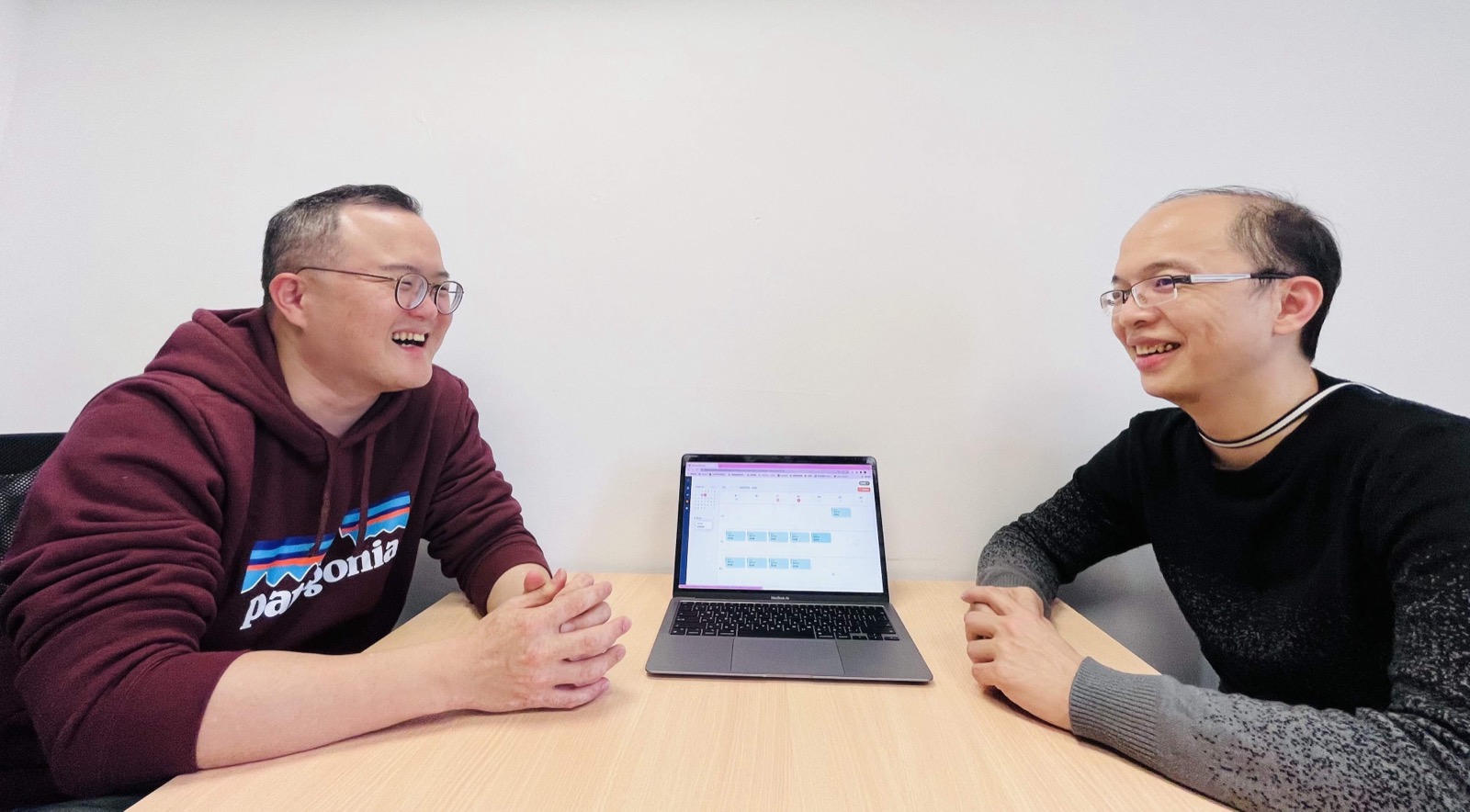
"I've been a professional patient since I was a kid, and I was convinced there had to be a better way," says Hugo Peng (Peng Yu-Jung), co-founder of the Jiayujia team and the driving force behind the new registration system.
"The experience of seeing a doctor starts the moment you go to book an appointment." Jiayujia founder Hugo Peng and Dr. Kuo Chia-Ying, who has more than seven years of hands-on observation working in primary care clinics, believe the patient experience shouldn't begin at the consultation, but at the moment someone first vaguely senses something is wrong and decides to book.
Drawing on years of experience founding and mentoring startups, Jiayujia's two co-founders, Hugo Peng and Dr. Kuo Chia-Ying, brought in design thinking: design workshops, service design, qualitative and quantitative interviews with medical staff and with many of the patients Dr. Kuo has cared for over the years, and feedback from the team and its physician angel investors drawing on years of experience across primary care clinics. Combined with long-term planning and validation by a professional front-end UI/UX team, they pushed forward through plenty of stumbles until, through a referral, they found 5xRuby, a team with professional and dependable development capabilities. Together they built the Resonance registration system to solve these pain points and rolled it out first at the Resonance clinic they founded themselves, determined to give patients a better booking and consultation experience. Within six months of the clinic opening, the system had been validated by 2,500 patient visits.
Bigger =\= Better: Understanding the Team's Needs Is What Matters
"Before we talked with 5xRuby's software development team, we had already spoken with many tech teams, including large international system integrators with more than a hundred people," says Hugo, co-founder of Jiayujia and the Resonance clinic, with a wry smile.
"But what we wanted was a team that understood our real needs (the job to be done). Bigger isn't necessarily better. We actually liked the flexibility and agility that small and mid-sized teams can offer."
At the MVP stage of building a SaaS service, a startup first needs to build a skateboard it can stand on, so it can get to market quickly, validate fast and iterate. Hugo felt that from the very first conversations, 5xRuby's understanding of MVPs and its flexibility as a team were far ahead of the others.
Understanding the difference between a startup and a typical enterprise, and offering a pace of work that fits a startup's business plan, was one of the key reasons Jiayujia chose 5xRuby.
Adapting Quickly to Make an Impossible Timeline Possible
To meet the startup's urgent timeline, 5xRuby brought in a Tech Lead from the very first meeting. When we took on the project, there were only a little over two months left until a key milestone review, and three teams were involved: UI/UX experts Yoshi Design; the MXI team, responsible for the MVP system analysis; and the 5xRuby team, which took over the subsequent SA, data structure design, development and deployment. Our CEO, Mu-Fan, personally led a development team of as many as ten people fully dedicated to the project. He also served as the system architect himself, drawing on more than 20 years of system development experience to handle the complex system design.
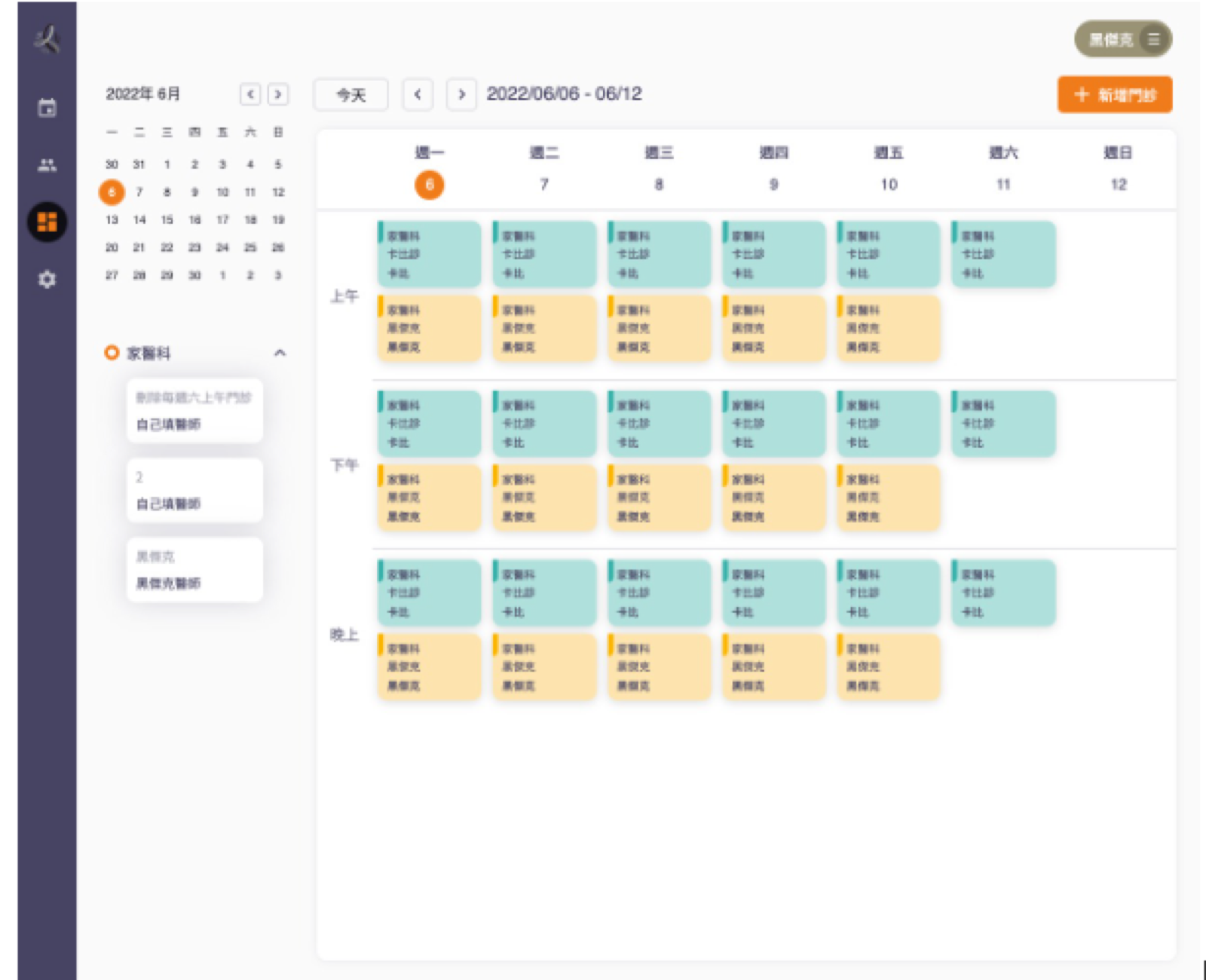
A clinic's front desk comes with many complex requirements, all of which have to be considered in the system design. Depending on the situation on site, the queue numbers the system issues fall into four types, and every number must belong to exactly one of them; there is no "any type." Deciding whether a slot is still open also has to be multiplied across different time dimensions so the system's logic doesn't become unmanageable. As a result, determining the status of each clinic session and queue number means weighing a great many factors, and filling in industry knowledge along the way is absolutely essential.
That is why every requirements discussion involved not only project manager Winnie but also lead system architect Mu-Fan himself. Only that made it possible to pull off the remarkable feat of going from receiving the design mockups to system planning, development and the first release, including unit tests, in just two months.
The Secret to Efficient Collaboration Is Communication Management
In the first phase, the team focused on solving on-site registration for psychiatry and psychosomatic medicine. Given the nature of the specialty, users changing an appointment face more than four variables: department, clinic session, time slot and date. Each variable changes depending on the other three. Whether a session is open and whether a booking can be made also need separate checks. Untangling the scenarios these variables create, then breaking them down and putting them back together once understood, takes very clear logic.
- Thorough understanding before development
Because the usage scenarios were so complex, 5xRuby used visual diagrams to confirm scenarios with the PM, clarify the user flows, and prioritize which features had to be completed based on the timeline.
- Transparent communication during implementation
Part of the original SA was completed by another party's SA before being handed over to 5xRuby. 5xRuby project manager Winnie worked with Yoshi Design to consolidate all the specifications and narrow them down to the scope most likely to be completed within the set review timeline.
It was the first time all three parties had worked together. Aligning the pace of communication across different teams, each with slightly different priorities rooted in its own expertise, took a lot of effort on all sides. Beyond real-time discussions on Slack, the teams held weekly meetings to check progress and used a kanban board to keep task status in sync, collaborating openly and transparently to avoid misunderstandings.
Experience Multiplied by Technical Skill Leads to Better Solutions
As one of the most experienced MVP development teams in Taiwan, 5xRuby has a responsibility to propose better solutions. When clients run into problems, they may already have a solution in mind, but 5xRuby puts overall architecture, usage logic and data design first, following a strategy of "understand the reason behind the requirement first, then offer a solution." This avoids cases where something "meets expectations but isn't the best approach," which can introduce unreasonable logic into the code or data and create risk for the product.
The technical solutions 5xRuby adopted in the first phase include:
- Front end: Hotwire
Complex front-end UI interactions are handled on the back end.
- Database: PostgreSQL
To support the experience medical staff need on the front end, we used PostgreSQL's ability to generate "a series of ordered data," such as a sequence of dates from 1/1 to 1/31, so users can easily query the database to see which events fall within a given week or month, just like a real calendar.
Choosing Better-Suited Development Tools
Clinic workflows called for many custom "form-like" components. After evaluating various approaches, 5xRuby chose the most suitable tools to improve overall development efficiency and reduce development complexity.
For example, when setting the number of queue numbers for a clinic session, each individual number "also" needs its own category. Previously, every element to be captured had to be coded by hand, but this time we used Stimulus JS, which let us quickly implement behavior for just the targets we needed. Features are cleanly separated by purpose, making everything easy to follow during development.
To meet the target clinic's consultation needs, the system had to provide quite a few special-purpose features, and using reusable elements saved a great deal of development time. A dropdown menu, for instance, only needs to be built once as a template and can then be used across many scenarios, making it far more versatile.
On to the Next Challenge
Looking back on a development stretch as fast and dizzying as a roller coaster, Hugo is deeply grateful: "The 5xRuby team always helped us weigh the technical pros and cons and walked us through their analysis. Progress was transparent and reliable. They're a very pragmatic team. If you really want to build something, if you want to change something about this industry, I sincerely recommend working with 5xRuby."
Since the first version of the registration system went live, more and more users have come on board, and its use cases have been validated by more patients and medical staff. It is now entering the next phase of challenges: optimization and performance improvements.
Do you also have a great software idea that you're determined to bring to life? Get in touch with the 5xRuby software development team, and let us use our technical expertise to help you build your product.